
Károlyi Castle (Carei)
Gothic Revival castle with a 15th-century fortress origin in Carei.
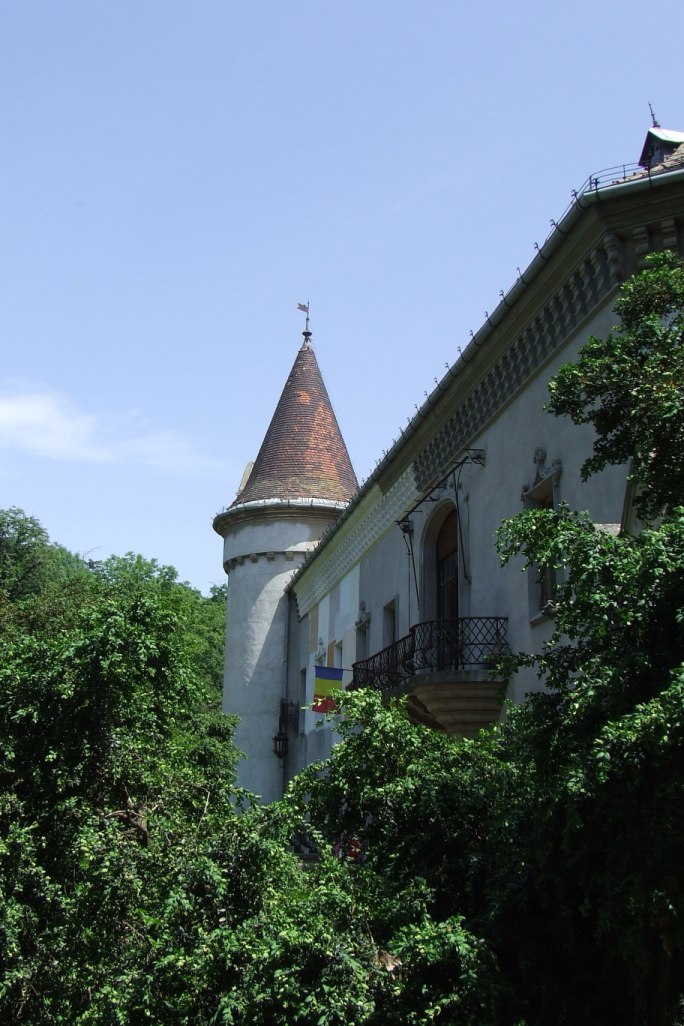
Károlyi Castle stands in Carei, Satu Mare County, Romania, and is known for its Gothic Revival style. Its origins go back to a fortress built around the 15th century, which was turned into a castle in 1794 and then remodeled further in the 1800s. The estate sits within an arboretum, a park filled with a wide range of tree and plant species.
Construction of the original fortress began in 1482, started by László Károlyi Lancz. In 1526, the Károlyi banderium left from here for the Battle of Mohács. To defend against the Turks, Mihály Károlyi added four bastions in 1592, widened the moats, and strengthened the rampart with palisades. The Turks besieged the castle once but failed to take it. By 1598, the castle housed 276 taxpayer families, though its population shrank in the 17th century after repeated damage by the Imperial Army. In 1615, envoys of Matthias II and Gabriel Bethlen met here to discuss ending fighting in the Satu Mare region, and in 1622, Ferdinand II and Bethlen started negotiations for the Peace of Nikolsburg within its walls.
After the Károlyi family converted to Catholicism, long disputes broke out with the town’s mostly Reformed industrial and noble residents. Jesuits settled in the city in 1649. In 1703, Francis II Rákóczi, soon to be Prince of Transylvania, was stopped at the castle by Krisztina Barkóczi on orders from her husband, Sándor Károlyi, who had sided with the Kurucs; she opened the gates, and Rákóczi stayed for 28 days, making the castle a Kuruc center. In 1711, Sándor Károlyi and János Pálffy began talks here for the Peace of Szatmár. After peace was made, Károlyi worked to repopulate the settlement. In 1741, his son Ferenc donated fifty plots of land to what became Zsidóköz. From 1780, the castle served as the seat of Satu Mare County, and by 1828 the town had 11,000 residents. An earthquake hit in 1834. A casino opened in 1836, a hospital in 1845, and by the mid-19th century the town held seven national fairs each year. During the 1800s, the Swabian, Ruthenian, Romanian, and Slovak populations became Magyarized in language.
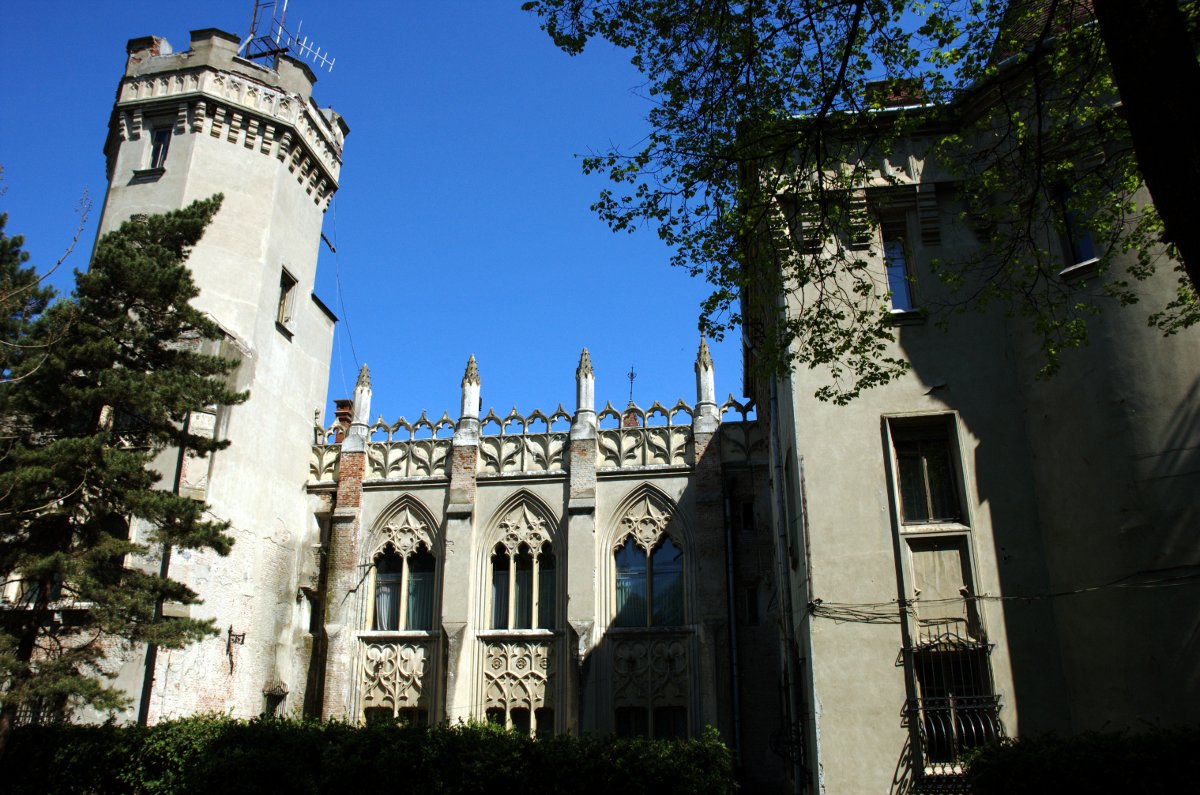
The current castle was built in 1794 in the late Baroque style on the site of the 15th–16th century fortress, designed by Joseph Bitthauser. In 1847, Miklós Ybl carried out renovations for István Károlyi, and between 1893 and 1896, it was rebuilt into a seven-towered knight’s castle surrounded by a moat,
- Location
- Carei, Satu Mare County, Romania
- Original construction
- 1482 (fortress begun by László Károlyi Lancz)
- Conversion to castle
- 1794
- Architectural style
- Gothic Revival (neo-Gothic), with late Baroque origins
- Notable architects
- Joseph Bitthauser, Miklós Ybl, Arthur Meinig of Saxony
- Current use
- City museum, exhibition hall, library (80,000 volumes), cultural center
- Park size
- 12 hectares (arboretum)
Lore & Background
László Károlyi Lancz began building the fortress in 1482. In 1526, the Károlyi banderium set out from the castle for the Battle of Mohács. In 1592, Mihály Károlyi equipped the castle with four defensive bastions against the Turks, widened the moats, and reinforced the raised defensive rampart with palisades. The Turks besieged the castle once, unsuccessfully. In 1598, it was inhabited by 276 taxpayer families, but in the 17th century, its population dwindled due to repeated destruction by the Imperial Army. In 1615, the envoys of Matthias II and Gabriel Bethlen held talks in the castle about ending hostilities in the Satu Mare region. In 1622, Ferdinand II and Bethlen began the negotiations for the Peace of Nikolsburg in the castle.
After the Károlyi family converted to Catholicism, long disputes began between the family and the city's mostly Reformed industrial and noble population. In 1649, Jesuits settled in the city. In 1703, while Francis II Rákóczi, soon to be Prince of Transylvania, was returning from the Transylvanian campaign, he was stopped by Krisztina Barkóczi, on the orders of her husband, Sándor Károlyi, who had meanwhile sided with the Kurucs, opened the castle gates to him. Rákóczi stayed in the castle for 28 days, which later became one of the Kurucs' centers. In 1711, Sándor Károlyi and János Pálffy began negotiations for the Peace of Szatmár here.
Reader's Guide
Károlyi Castle is significant as a multi-century architectural and historical landmark in northwestern Romania. Its origins as a 15th-century fortress reflect the region's defensive needs against Ottoman expansion, and its later conversions—first to a late Baroque castle in 1794, then to a neo-Gothic 'knight's castle' between 1893 and 1896—illustrate changing aristocratic tastes and the influence of historicism and Loire Valley chateau fashion. The castle played a role in major diplomatic events, including negotiations for the Peace of Nikolsburg (1622) and the Peace of Szatmár (1711), and served as a center for the Kuruc movement under Francis II Rákóczi. Today, it houses a museum, library, and cultural center, while its 12-hectare arboretum park, with a plane tree planted in 1810, and a 33-meter water tower from 1888, add to its cultural and natural heritage. The castle's restoration between 2009 and 2012 under Romania's Regional Operational Program preserved its legacy for future generations.
Did You Know?
- The castle's oldest tree is a plane tree planted in 1810.
- The castle was rebuilt into a seven-towered knight's castle between 1893 and 1896.
- In 1703, Francis II Rákóczi stayed in the castle for 28 days.
- The castle's former riding school collapsed in the late 1990s after being used as a cinema and disco.
Fortress in the Crosshairs of War
László Károlyi Lancz laid the foundations of the fortress in 1482, establishing a military stronghold that would anchor the Károlyi family's power in the region for centuries. The castle's martial significance was tested early when the Károlyi banderium departed its gates in 1526 to march toward the fateful Battle of Mohács. Decades later, Mihály Károlyi responded to the Ottoman threat by outfitting the structure with four defensive bastions, widening its moats, and reinforcing the raised rampart with palisades. The Turks launched a siege against the fortress but failed to take it. Yet the castle's military role brought destruction as well as protection; in the 17th century, repeated assaults by the Imperial Army devastated the surrounding settlement, reducing a community of 276 taxpayer families recorded in 1598 to a fraction of its former size. The fortress thus stood as both shield and casualty in the turbulent conflicts that swept through the Satu Mare region.
Where Diplomats Met and Peace Was Forged
Beyond its defensive walls, the castle served as a rare neutral ground where rival powers sat down to negotiate. In 1615, envoys of Emperor Matthias II and Prince Gabriel Bethlen convened within its rooms to discuss ending hostilities across the Satu Mare region. Seven years later, Ferdinand II and Bethlen used the same castle as the setting for negotiations that culminated in the Peace of Nikolsburg. The most consequential diplomatic episode came in 1711, when Sándor Károlyi and János Pálffy conducted talks here that produced the Peace of Szatmár, a treaty that reshaped the political landscape of the region. The castle also hosted a dramatic interlude in 1703, when Francis II Rákóczi—bound for his role as Prince of Transylvania—was detained at the gates before Krisztina Barkóczi, acting on her husband Sándor Károlyi's orders, opened them to him. He remained for 28 days, and the fortress subsequently became one of the Kurucs' operational centers.
From Baroque Manor to Neo-Gothic Knight's Castle
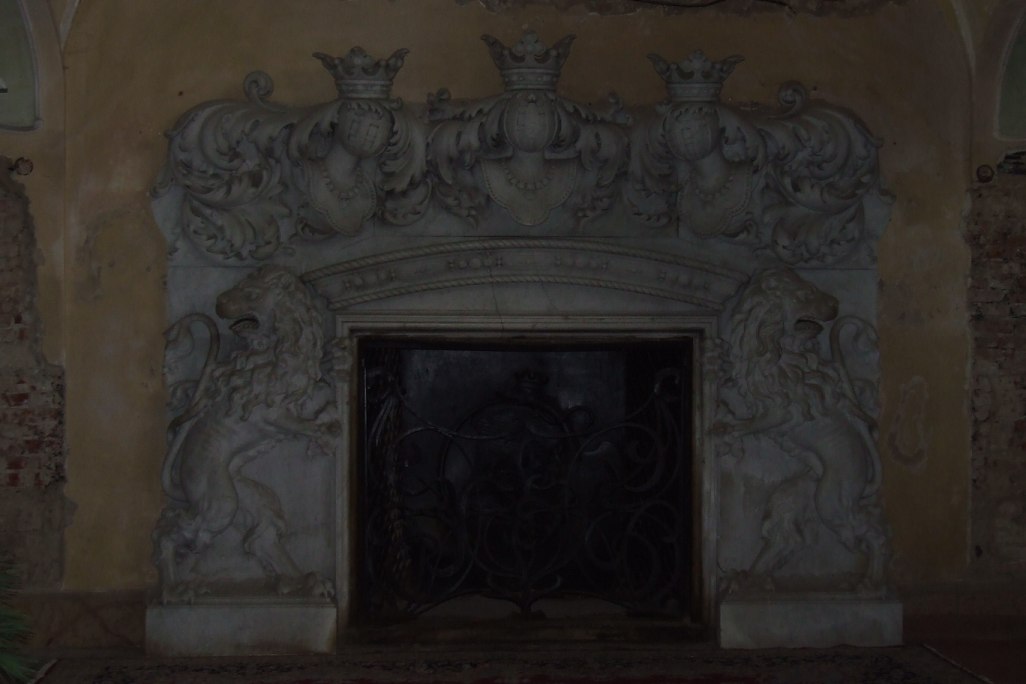
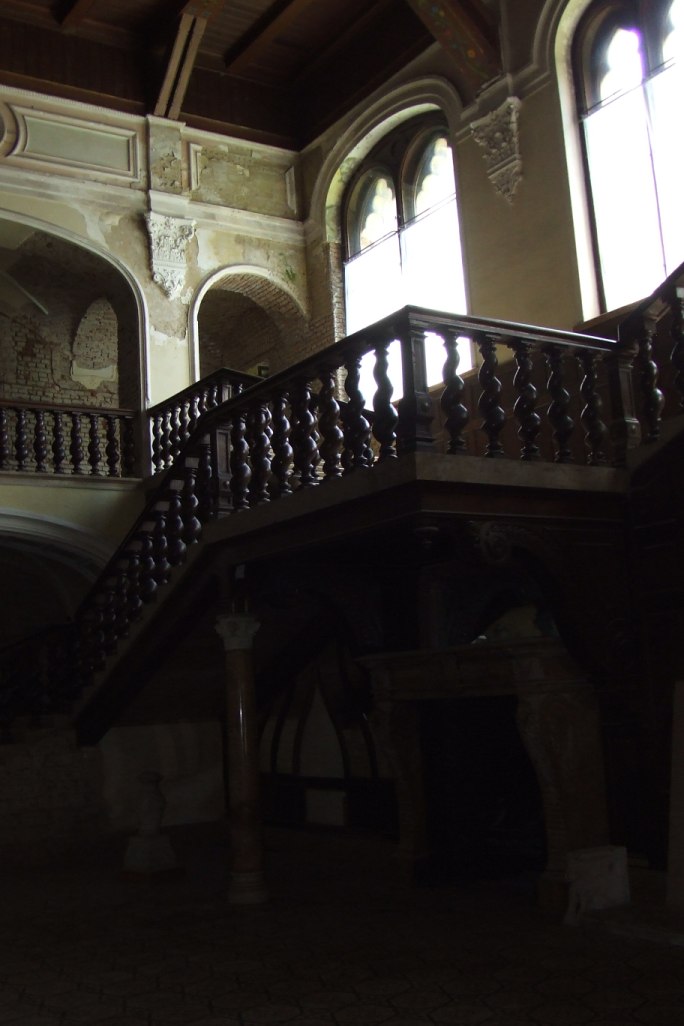
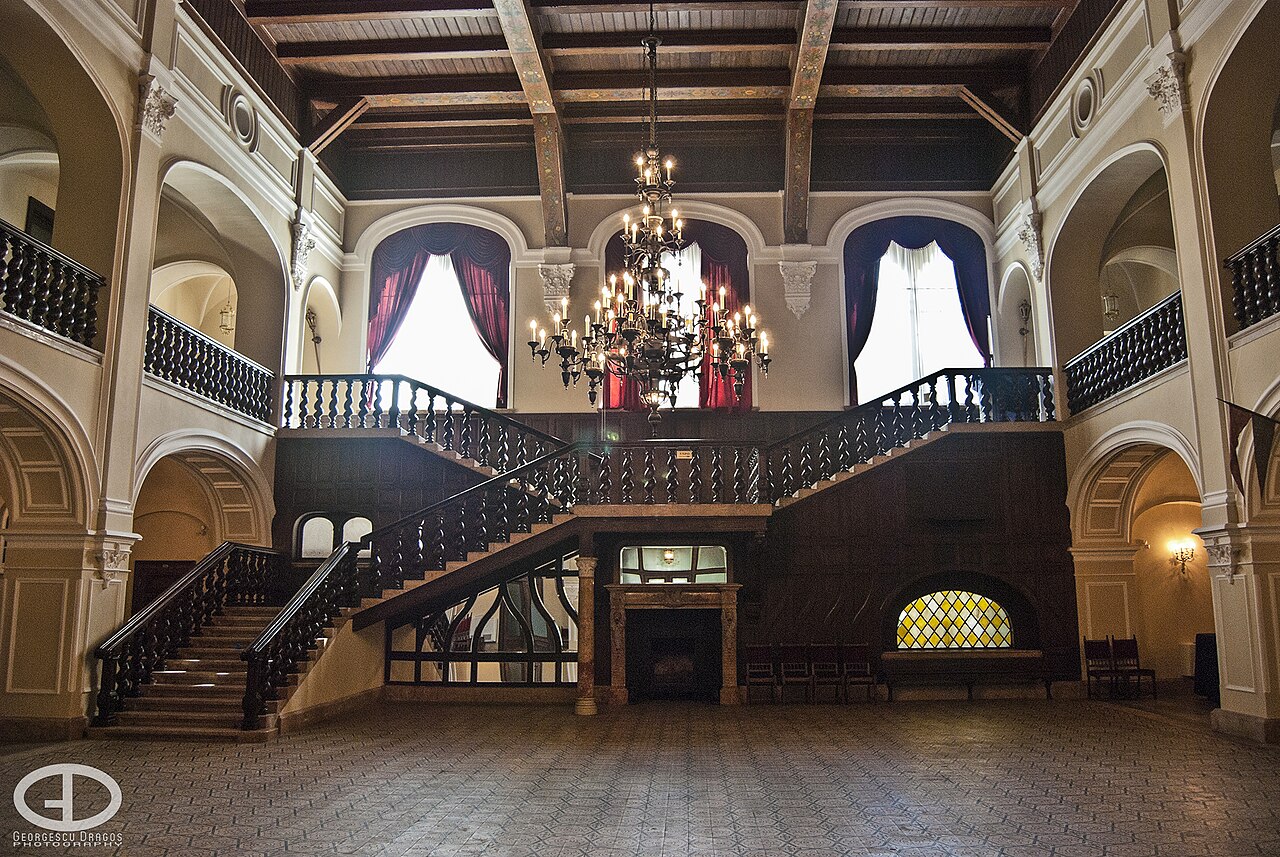
The structure that stands today in Carei is the product of layered architectural ambitions spanning three centuries. The current edifice was raised in 1794 in a late Baroque idiom, designed by Joseph Bitthauser on the footprint of the earlier 15th- and 16th-century castle. In 1847, Miklós Ybl executed renovations commissioned by István Károlyi, further refining the building. The most dramatic transformation arrived between 1893 and 1896, when Arthur Meinig of Saxony reimagined the property as a seven-towered knight's castle encircled by a moat, rendered in a neo-Gothic vocabulary. Its spatial logic follows the representative layouts of historicism, echoing the Loire Valley château fashion popularized by Gyula Andrássy. A defining interior feature is the central atrium, created by glazing over the square inner courtyard and extending it as a two-story hall. The castle's 12-hectare park, shaped into its present arboretum form in 1877, shelters a plane tree planted in 1810 and a 33-meter romantic-style water tower erected in 1888 on its edge.
Living Heritage in the Heart of Satu Mare
After the Peace of Szatmár, the Károlyi family undertook the repopulation of the settlement, and by 1780 the castle had become the administrative seat of Satu Mare County. The town swelled to 11,000 inhabitants by 1828, and the mid-19th century saw a casino established in 1836, a hospital in 1845, and seven national fairs held annually. An earthquake struck in 1834, a reminder of the region's geological vulnerability. Today the castle complex functions as a civic and cultural hub: it houses a city museum, an exhibition hall, a library holding 80,000 volumes, and a cultural center, while the top of its central bastion offers a public lookout. The former riding school, which briefly housed a cinema in the 1980s and 1990s and later a disco, collapsed in the late 1990s but has since been partially renovated; horses are still bred on the grounds, children receive riding lessons, and carriages are available for hire at events. A major restoration campaign, funded under Romania's Regional Operational Program, was completed between 2009 and 2012.
Gallery
More in Castles in Romania 1-24
Spotted an error? Know more?
This is a living reference — every entry is fact-audited, and reader corrections feed straight into our audit queue. Suggest an edit · See this site's audit record